Showing posts with label conservation. Show all posts

Monday, 13 April 2015

Free Access 14: Over 20,000 articles free to read

Now through April 26th, ALL online content, including 2015 issues for every single journal we publish in archaeology, conservation and heritage is 100 percent free to download. No sign ups, no registration, no strings attached: just free content from us to you. 

Free Access 14 (FA14) is our way of showing our appreciation for the amazing community of scholars and researchers who are dedicated to advancing knowledge in this exciting, ever-changing field. 

FA14 gives you access to research in 18 subject areas, including underwater archaeology, museum studies, field archaeology, conservation and more. The archives date back over 100 years to 1869. Click here to dig in and start enjoying your free content. 

Some of the most popular journals featured in this special promotion include: 


We're also excited to include some of our new titles for 2015: 

Tired of all the free content? We didn't think so. You can enter to win online subscriptions to all 43 of our journals for an entire year when you Tweet using the hashtag #idigthisjournalbecause and mention @ManeyArchaeo 

Just let us know what makes your favorite journal so special, and you could be rich in archaeological research! Three runners up will also win an online subscription for the journal of their choice for a full year.  
    

Monday, 28 July 2014

'Building Strong Culture through Conservation' ICOM-CC 17th Triennial Conference, Melbourne, Australia

The 17th Triennial Conference of the International Council of Museums Committee for Conservation (ICOM-CC) will attract leading international keynote speakers and up to 800 delegates, including conservators, scientists, historians and art historians, curators, librarians, archivists, students, collection managers and directors from the world’s leading cultural institutions and the private sector.

The culmination of ICOM-CC’s three-year cycle of collaboration and research, the Conference offers technical sessions of the twenty-one specialist Working Groups, keynote speeches, behind the scenes visits to local conservation laboratories and sites of historic interest, cultural and social events as well as numerous opportunities to meet and forge ties with colleagues from every region of the world. Twenty-seven years after its memorable 8th Triennial Conference in Sydney, ICOM-CC is pleased to return to the Australian continent, this time to Melbourne.

Each Triennial Conference is a joint initiative of ICOM-CC and partners in the host country. The Australian National Organizing Committee for the 17th Triennial Conference is comprised of the The Centre for Cultural Materials Conservation of the University of Melbourne and The Australian Institute for the Conservation of Cultural Material (AICCM), Australia’s leaders in conservation training and practice. Together, we are working to provide an invigorating, productive, and exceptional Australian experience in September 2014.

Support for the selection and publication of papers and posters in our publication, ICOM-CC Triennial Conference Preprints, has been provided by the Getty Conservation Institute, and the Getty Foundation has provided support for travel grants for cultural heritage professionals from economically challenged and emerging countries.

Register for the conference today >

View the list of papers >

Monday, 17 March 2014

An Unbroken History: Conserving East Asian Works of Art and Heritage

IIC 2014 Congress

Monday 22 September 2014 to Friday 26 September 2014

IIC is delighted to present the 25th biennial IIC Congress and, for the first time, IIC is holding this essential international conservation event in a sub-tropical region - which brings its own, very particular problems of preventive conservation.

The 2014 Congress will be held at Hong Kong’s City Hall, situated in the very heart of the city.

Objects of art and heritage generally reveal their significance through different senses: their form and appearance; the messages and stories they contain; the knowledge and information hidden within them. Hence, conservation efforts are meant not only to assist the study of the history and the making of our heritage but also to help us to appreciate and to revivify its beauties and merits. Each form and artefact of East Asian art and heritage, in addition to assuming a unique style and nature, carries an important meaning from and testimony to the culture and history of the people and the region that created them.

The IIC 2014 Hong Kong Congress will provide a platform to bring together a wide variety of views and dialogues to address the various areas of work, study and analysis involved in the conservation of East Asian art and heritage. It will focus on how conservation helps to retain or recover and then communicate the messages that East Asian art and heritage carry, and will address how the history or meaning of this art and heritage affects the decision-making processes and course of conservation treatments. Different conservation approaches, and hence methodologies, will be discussed and examined, and will link in to the unveiling of traditional craftsmanship, manufacturing materials and patterns of use or previous restorations. With advances in technology, an increasingly efficient flow of information and a growing awareness of conservation ethics, more specific and sustainable ways to treat art and heritage, as compared to traditional approaches, will also be explored.

These different approaches to conservation may be applied to the treatment of a wide range of objects and materials: scroll paintings and calligraphy; prints; textiles and costumes; wall paintings; sculpture; furniture and lacquer wares; jewellery, ceramics and metalwork of all varieties pertinent to the region. The conservation of the built heritage, including historical and archaeological sites, monuments and historic buildings with distinctive oriental features is an important aspect of conservation in the region. The intangible cultural heritage of a community, its traditions, customs and rituals, its music, folk arts and crafts, has a value that is incalculable, but it may wither and diminish inconspicuously, unable to compete with the pressures of the strident modern world, if we are unaware of its importance. Innovative approaches and methods are required if we are to preserve the relics and objects which are inseparable parts of the intangible cultural heritage and complement efforts in its preservation.

Register now!
You can register easily at the IIC web-site: www.iiconservation.org

Friday, 21 February 2014

Who is in charge? Who should be in charge? The management of World Heritage Sites

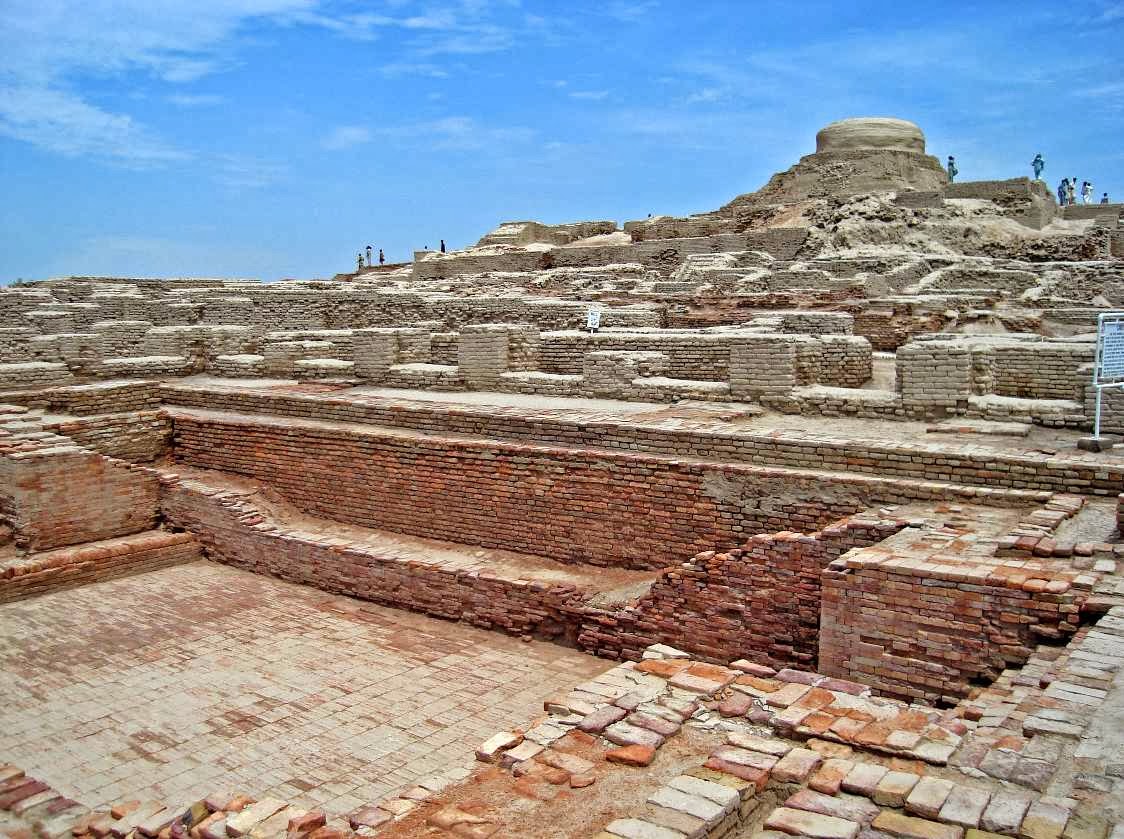
The BBC reported this week that conservationists in Pakistan have appealed to UNESCO to relocate a cultural festival scheduled to be held at the World Heritage Site Mohenjo Daro in the Sindh province. It is the world's oldest city and one of the largest settlements of the ancient Indus Valley Civilizations. The festival is the brainchild of the young leader of the Pakistan People's Party, Bilawal Bhutto Zardari.

"The ruins, discovered in 1922 by British archaeologist Sir John Marshall, are 425km (265 miles) north of the port city of Karachi. They are one of Pakistan's six Unesco World Heritage sites deemed places of special cultural significance. But many of the country's historical sites are crumbling through neglect, endangered by vandalism and urban encroachment, as well as a booming trade in illegally excavated treasures."
 
So who is in charge? Perhaps the more important question is, who should be in charge?
 
Conservation and Management of Archaeological Sites published 'Management Plans for Archaeological Sites: A World Heritage Template' in a 2010 issue of the journal. The article aims to make the general recommendations of a failed attempt to produce a Management Manual for World Heritage Archaeological Sites and Monuments, which brought together a body of experts in 2002 at Ma'agan in Israel, more widely known among those concerned with the management of archaeological sites.

The paper summarizes the outcomes of the meeting, including ideas on the structure of a management plan, the planning process, team building and public participation, site significance, conservation, monitoring, maintenance, presentation and interpretation, tourism and action plans.

"The properties on the World Heritage List are by definition very diverse in size and nature. The cultural sites and monuments range over time from fossil hominid sites (the Peking Man Site at Zhoukoudian and the Java Man site at Sangiran) to the architecture of the twentieth century (the Bauhaus and its sites in Weimar and Dessau and the works of Gaudí in Barcelona). They are located in countries with widely differing histories, traditions, and present-day legislative and administrative structures. As a result, the information given in these Operational Guidelines is of necessity generalized."

So when a nation's political agenda is in direct conflict with its responsibility to preserve World Heritage Sites for future generations, who decides the winner? Unfortunately that question appears to remain unanswered.

Read the full article for free >

Read the BBC article "Pakistan's Mohenjo Daro ruins 'threatened by festival" >

Tuesday, 14 January 2014

CALL FOR PAPERS: Museums and Politics

Museums and Politics
9 - 12 of September 2014, Saint-Petersburg, Russia
ICOM Russia, ICOM Germany, ICOM USA Joint Conference
 
In the last few years, museums in our countries have changed dramatically and many now have larger social and territorial responsibilities. The preservation and safeguarding of tangible and intangible cultural heritage is considered the most relevant function of museums and should not be neglected. However, contemporary museums have wider goals. They offer public services and social activities, as well as culture and knowledge. They serve new audiences, use new languages and new media. Innovative museums foster public awareness, promote understanding of heritage and offer educational services. They strengthen cultural identities, support social cohesion and develop intercultural mediation - activities which are fundamental in times of crisis. Museums produce public values and improve regional assets in a global world. They provide facilities and resources for local, regional and national communities. They generate not only knowledge and education, but also income and employment. Museums and monuments are among the most appealing factors for the tourism industry, a vital economic sector in all our countries. Investing in museums, their activities and their professionals, is the best way to develop and improve the quality of cultural tourism.
 
During the last decades, museums have become institutions that form identity of cities, countries and nations with a reasonable political impact. At the same time, the funding of museums has undergone a major alteration, facing cuts from public authorities and the need of finding more and more sponsors whose interests complement museum development. Additionally, museums are increasingly invited to assume and complement educational tasks in the public sector suffering from the training of soft skills and creative competences.
 
Some museums have become more and more influential within their society and the politics in the countries that pay attention to them. Is this growing influence good for museums or not? Could museums become a plaything for politics or should museums use politics to realize their main purposes?
 
The conference languages will be Russian, English and German.
 
The purpose of this joint meeting is to share knowledge and expertise within the museum community. All contributions should be of high quality, originality, clarity, significance and impact and not published elsewhere.
 
CALL FOR PAPERS

The papers must not exceed 20 minutes. A publication of the papers is planned.
 
Abstracts should contain a maximum of 400 words and include the presenter's name, place of employment, position and title of paper.
 
Abstracts should be sent to: Mr. Vladimir Tolstoy (icom.russia@gmail.com) and Johanna Westphal (icom@icom-deutschland.de).
 
Abstract Submission Deadline 28th of February 2014
 

Monday, 6 January 2014

NEW PhD Opportunity: Fully Funded Studentship in the Structural Conservation of a Tudor Warship

Application deadline: ASAP

Start date: February 2014

Applications are invited for a three-year PhD studentship to undertake research in the area of Structural Monitoring, Modelling and Materials Science of the Mary Rose Hull structure during the environmentally controlled drying phase of its conservation.

Funding - Courtesy of The Mary Rose Trust
University tuition fees at home/EU level will be fully covered and a tax-free bursary of £13,726 per year will be provided for the three-year duration. Home/EU applicants are eligible for full funding.


Project description
The successful applicant will join the Structural Engineering research group in the School of Civil Engineering and Surveying at Portsmouth University.

The objectives of the proposed research are to:

• Study and understand local movement in The Mary Rose timbers due to shrinkage and
  collapse.
• Monitor and interpret global movement of the timbers and their reliance on existing and
  any additional supporting structures, cradle and barge.
• Investigate additional structural monitoring methodologies and propose/optimise suitable
  future structural support mechanisms for The Mary Rose.


The applicant is also expected to actively participate in the publication of journal and
conference papers.


Entry requirements
Applicants should hold a Masters degree or First (or Upper Second) Class Honours degree in Engineering, Physics or Material Science.


Further information
If you wish to discuss any details of the project informally, please contact the academic
supervisor Dr David Begg.


How to apply
Applications (preferably by email) should consist of a letter of application explaining your reasons for applying for the position and your initial thoughts on the research area, a detailed CV (including expected or actual degree class), together with the names and contact details of two academic referees who can be contacted prior to interview.


These should be sent to Dr David Begg by email: David.Begg@port.ac.uk, or by post to Dr David Begg, School of Civil Engineering and Surveying, University of Portsmouth, Portland Building, Portsmouth, PO1 3AH.

Wednesday, 11 December 2013

Cannon you believe it? The time and money it takes to conserve artefacts salvaged from shipwrecks

You may have seen in the news last week that further diving at the Elizabethan wreck that sank off Alderney in the Channel Islands, UK in the 16th Century has been carried out by the Alderney Maritime Trust and staff from Bournemouth University. They have uncovered three cannon and "substantial ship timbers" in addition to over 1,000 artefacts that were salvaged from the first dive to the wreck in 2008. The unnamed ship sunk in November 1592 and was discovered by local fishermen Bertie Costeril and Fred Shaw in 1977.

Mike Harrison, coordinator trustee, said more work on the site was going to go ahead next summer and explained the large lapse in time between dives by stating that "[t]hings move very slowly with marine archaeology, the work we've done in the last few years... has been conserving objects." However he also noted that "it's very, very expensive... we've got a lot of fundraising to do, it's tens of thousands of pounds, conserving a cannon is £10,000 for example."

I took a look in our online archive to read more about conservation in maritime archaeology and came across the article 'In situ conservation of cannon and anchors on shipwreck sites' by Ian Donald MacLeod in a 1996 issue of Studies in Conservation. In the article the author explains how a wrought iron anchor and a cast iron carronade from the wreck of HMS Sirius (1790) received In situ electrolysis treatment using sacrificial anodes in the shallow waters off Norfolk Island in the South Pacific Ocean.This pre-treatment stabilises the artifacts and ensures that they can be safely recovered and transported.

Monitoring on the seabed and in the laboratory showed that approximately 80% of the chlorides had been removed from the carronade before excavation. The cathodic
pre-treatment results in a significant improvement in the quality of the surface of the metals. He argues it is possible to maintain artifacts on the seabed by continued use of sacrificial anodes.

>> Read the full article for free


Monday, 11 November 2013

What we're looking forward to at Museums 2013

This week we are exhibiting at Museums 2013, the annual conference and exhibition of the Museums Association, in Liverpool, UK and in this week's post Laura Bradford, one of our Publishing Executives, shares her thoughts on the programme...

"This is my first Museums Association conference and judging by the flurry of announcements about themes and keynote speakers, it’s not going to disappoint. In a time of on-going turmoil for the museums and heritage sector, the range of sessions and topics here promise to address the challenges organisations face today and question how they can adapt to survive and flourish. The Museums Association provides a vital resource for news and commentary on the museums sector and I’m sure their conference will once again set to inspire and encourage delegates to tackle the challenges facing museums and heritage organisations today.

Museums 2013 aims to address the matter of wellbeing. Liverpool is leading the 2012 Decade of Health and Wellbeing national campaign and so is perfectly placed to ask these questions. Can museums play a part in improving the wellbeing of their audiences? Should museums concentrate on engaging with audiences rather than protecting their collections? How can museums do this whilst building foundations for the future?

Three key themes set the structure for the conference; ‘The Therapeutic Museum’ asks how museums can play a part in improving mental health and wellbeing. Sessions will look at the partnership and funding opportunities between museum organisations and health and social care providers; engaging and empowering older people to take an active role in museums; and ensuring museums publicise the difference they make to encourage more organisations to follow. Research at the New Walk Museum in Leicester did just that—they studied frequent and infrequent visitors to the museum, and conducted interviews and self-reported data using the State Trait Anxiety Inventory. Participants reported a reduction in their levels of anxiety after visiting the museum. The full study was published in the peer reviewed journal Museums & Social Issues.

‘Tomorrow’s World’ aims to address how organisations can learn from the challenges we face today in order to plan for a sustainable future—not just for the short term, but changes that could shape the museums experience for our grandchildren and great grandchildren. In a time of severe cuts in funding and depleting resources, museums have had to become savvy to new sustainable measures and money saving techniques. Sessions on this theme will explore how to implement new and perhaps leftfield ideas, looking at the unconventional ways in which museums can engage with audiences. The International Museum of Women (IMOW) for example is an online-only museum which has harnessed online technology to create a new way of engaging. Journal of Museum Education has dedicated an issue to the growing use of digital technology in museums and one article by Katherine Whitney explores how the IMOW specifically has used technology to accomplish their aims.

‘The Emotional Museum’ will run sessions addressing whether museums are doing enough to engage with their audiences. In recent years, museums have realised that they need to revolutionise their exhibitions in order to attract diverse audiences—reams of information just doesn’t cut it anymore. Audiences seek more interactive and empathetic information to allow them to engage with the exhibition and make it a memorable experience. Sessions focus on case studies including how some museums have challenged social attitudes relating to prejudices and discrimination, and how other museums have tried to adapt their exhibits to make them more engaging. Journal of Museum Education published a special issue recently on this topic, entitled ‘Protecting the Objects and Serving the Public: an On-going Dialogue’, which seeks to discover how museums can prioritise the visitor engagement whilst maintaining the exhibition of artefacts.

I’ve only looked at the key themes and already run out of space! There is so much to explore at this year’s conference including keynote speeches from the director at the Museum of Memory and Human Rights Ricardo Brodsky, shadow culture minister Helen Goodman, and TV presenter Lucy Worsley; networking events and tours around Liverpool’s top cultural hotspots; workshops on all aspects of museums engagement, as well as CV building workshops and internship management advice. Last but not least, don’t forget to visit the Museums 2013 Exhibition for your chance to meet and network with the world’s leading suppliers and consultants. It’s going to be a busy one!"

Monday, 10 June 2013

"Stuff matters": The crucial work of the American Institute for Conservation - Collections Emergency Response Team

An interview with Eric Pourchot, Institutional Advancement Director at the Foundation of the American Institute for Conservation

Why was the American Institute for Conservation - Collections Emergency Response Team (AIC-CERT) established?

It came out of the experience we had after Hurricane Katrina as many of our members from AIC had served on teams that went down to the New Orleans and Gulf Coast area to help cultural institutions recover as best they could from that disaster. They realised that there were a lot of good intentions and well-meaning people that came from a different background and had different training, and therefore it didn’t work as efficiently, as smoothly or as safely as it could have. Also people, including the participants, didn’t know how FEMA (Federal Emergency Management Agency) and other emergency management systems worked and how they fit into the bigger relief effort as of course people had little way of communicating with each other with the phone lines being down.
 
It really came of the feeling we can do better, so we created a grant proposal for the IMLS (Institute for Museum and Library Services) a federal agency that would train 60 people (3 groups of 20) across the USA and it would combine conservators, curators, librarians, archivists - people who could bring a lot of different skills and knowledge depending on what kind of collection was at risk.  Everyone would go through the same training and learn about health and safety issues, how to work as a team and how to work with the response agencies. 63 people were trained in the first round and then another grant in 2011 expanded it to a group of 107. It wasn’t the number of people that needed to be increased but we needed people spread across the country so that we were within close vicinity of a disaster’s location, had someone who could drive and not need a flight or rental car. The main calls we were getting were from smaller historic museums that had a wide range of materials - decorative arts, wooden artefacts, architectural issues - and we needed more expertise in those areas. So when we selected people the second time round, it was 2/3 conservators and about 1/3 other professionals. We learnt from a situation in which we had a call from Minot, ND which is closer to Canada and people who responded were 10-12 hours away. 

What is the most recent event the team has to respond to?

Well, the short answer to that is Hurricane Sandy in New York which was huge effort and unusual for us in that it involved private artists and galleries as well as public institutions, our mission is to serve the public collections but it was clear that in New York we’d be losing an incredible amount of artwork and cultural artefacts if we didn’t include them.

We knew what the possible track of the hurricane was going to be and we were able to send out press releases and reach the regional art and history organisations saying “If you need us, here is how to contact us” and there is a 24 hour hotline people can call that the volunteers staff. I don’t think anyone knew how devastating this was going to be and even the museums there who had been affected by Hurricane Irene little over a year before didn’t know it would be significantly worse. The Noguchi Museum for example had gotten through Irene with no problem but the flooding from Sandy was so high water was coming in through exhaust vents and people had sand bags and raised things up on tables but a 3 foot storm surge comes through and knocks out the windows, lifts the tables, topples book cases and some of the basement storage areas not only flooded but the strength of the water was enough to smash doors in. It was hard for people to realise the power of moving water as opposed to dripping water.

The team is still indirectly responding to the disaster by taking calls and we had people on site for 3 weeks after the devastation then we set up a facility in Brooklyn, a cultural recovery centre that we ran for 3 months, where people could bring items that they had pulled out of the basements and the studios. We cleaned them, decontaminated them, mended them, did surface cleanings and stored them safely until a full treatment could be done. While Sandy was happening we had a fire in Massachusetts and a fire in Oklahoma that effected collections and we sent people out in January and February to help with those, typically one or two people for a few days.


What plan of action is put in place by the team when major disasters such as the 2010 earthquake in Haiti strike?

The planning is very difficult as we have a very small budget for on-going maintenance of the team. We do have a coordinator, Beth Antoine, who is a conservator in New Orleans and she has a very small stipend to keep the teams together and to communicate with them to make sure people can get to small events whilst also manning the phone lines each month.

When we get to a big disaster like Haiti or Sandy and even Irene, we usually have to ramp up a bit and that means finding funding and if it is a domestic disaster that is effecting public institutions, typically there is some public money we can tap in to. After New York we basically started from nothing, we had already spent our year’s budget by the end of October and fortunately we were able to tap into some funds from Sotheby’s and other corporate funders and hire people on the ground in New York to coordinate volunteers. In New York we had 23 AIC-CERT members who volunteered but there were 80 other people, mostly conservators, who also volunteered and worked very hard.

In Haiti, another situation we weren’t prepared for, the need for help was so strong the Smithsonian was able to take a lead role in that response and they asked AIC-CERT to find volunteers to help with their efforts, mainly those who conserved artwork. We were led by Stephanie Hornbeck who was hired to direct the Smithsonian’s response. It started very rough – people were using pipes for hammers, credenzas for weights and you did whatever you could with what you had. Gradually we were able to get more supplies and equipment and establish a pretty good triage centre, not a full conservation laboratory, but at least something to provide people with the supplies they needed. It also involved a lot of training, mostly of Haitian artists who learned how to clean, care and mend the paintings.

Are there any particular artefacts of cultural significance or note that have been rescued by the team?

The really short answer is they are all significant – you go into a small museum in Iowa and it’s flooded, those collections may not have iconic status but for the community they are very important. These objects tell the story of their region. We work very closely with the owners of the collections to figure out what is critical and what can be replaced. In public libraries it is often cheaper to replace the fiction if the books are still on sale. Identifying what is important to tell their story is what our people are trained to do – a librarian can talk to a librarian, an archivist can talk to an archivist.

People are in shock as often what we go into is not just a burst pipe, but a flood that means their home and their spouse’s place of work is under water. In hurricanes you may not even know where all your
co-workers are as communication is very difficult. A workshop at this meeting [41st American Institute for Conservation Annual Meeting] was on psychological issues in disaster recovery and how you help people deal with the stress and make quick decisions.

In Haiti, some of the most significant collections were in private galleries and they don’t have the same public/private divisions. Iconic paintings were crushed under the rubble and had to be pulled back out. It was part of their heritage and what they needed as a country to survive. One of the surprising items rescued in a historical society in Iowa was a very large painting that had come off the wall and was down on the floor, we’d been walking on it so we then recovered it, restored it and returned it to the collection.

In New York we worked with at least 19 artists in the cultural recovery centre who brought their things in and explained what their needs were, sometimes it was just “I need space because I’ve filled every inch in my apartment and I can’t put them back in the basement as it’s not open to public access”. There was the Martha Graham company collection, props and costumes that date back forty years and are still being used, the Smithsonian was very interested in helping them as they knew these were iconic items that meant something to the country not just the dance company.

Why in times of crisis is it important to rescue our cultural heritage?
In Haiti, a lot of volunteers would go over on flights and there’d be doctors, nurses and engineers and the volunteers asked themselves ‘What am I doing, why am I taking up space?’. There are quotes from the Haitian communities saying they can build houses but heritage is what makes it worth all the effort and it makes their lives have meaning.
AIC-CERT isn’t going to be the first ones there, and we shouldn’t be, the health and safety of people and the structural integrity of buildings has to come first but there is a real need to help these communities to recover and continue. It is quality of life versus quantity of life - you could just tear everything down, put up pre-fab buildings and call it a city but that’s not how cities are formed. We are drawn to places, we are drawn to things, it is what gives us identity and I’m honoured to be working with people who have devoted their lives to the concept that “stuff matters”.

>> Read the blog 'Rescuing Haitian Paintings'


Tuesday, 28 May 2013

'We will either save both people and heritage or save neither': What can be done about corporate and government led destruction of archaeological sites?


Following the news that a construction company in Belize has destroyed the Noh Mul temple, one of the largest Mayan pyramids, when gathering gravel to expand the country’s road system I took a look in the Maney Publishing archive to see what has been published on the corporate destruction of archaeological sites and what, if anything, can be done about it.
Noh Mul, the Mayan temple in Belize was thought to be over 2,300 years old
'Commitment, Objectivity and Accountability to Communities: Priorities for 21st-Century Archaeology’ by Maggie Ronayne was published in a 2008 issue of Conservation and Management of Archaeological Sites. It argues that the destruction of archaeological sites by governments and corporations has to be confronted and uses case studies from Ireland, Turkey and Mexico to show how “professionals can learn to work in a mutually accountable way with communities opposing destructive development, and together seek alternatives to development which threatens lives, livelihoods, culture, and environment”. In the following extract the author proposes a plan:

It is no longer possible to ignore the unprecedented levels of destruction resulting from development projects imposed by multinational corporations and governments. The projects are often backed by multilateral agencies like the International Monetary Fund (IMF), World Bank or large non-governmental organizations (NGOs). Their size often ensures that many thousands of people and sites can be affected. The norm is little or no consultation and few if any benefits. Thus many communities find they must struggle to establish their right to survive. In this context, it is important to address the role archaeology and related professions such as heritage management play from the perspective both of the threat to physical heritage and our relationship with affected communities.

I am not a heritage manager but rather an academic, a teacher of archaeologists, whose research and teaching focuses on the development of a public archaeology in which professionals can learn to work in a mutually accountable way with communities opposing destructive development and together seek alternatives to development which threatens lives, livelihoods, culture, and environment. This approach has developed out of work in different countries over the last 14 years. The work has included investigating and documenting the ways in which archaeological excavation and management practices may be facilitating developments that are detrimental to the survival of communities and cultural heritage, and working out alternatives with communities.”

The author concludes with the following observation:

“I am not suggesting that it is up to archaeologists to solve energy generation, food security or any other aspect of development, but I am saying that as professionals we cannot afford to be ignorant of what communities want, need and are entitled to in order to develop and flourish. Archaeology and people’s cultural roots are not separable from these questions. They are not new questions: in 1968 Julius Nyerere, first president of independent Tanzania, in turning his country away from market-led development towards development based on the self-activity of communities, warned us of the mistake we are always in danger of making: ‘What we were doing, in fact, was thinking of development in terms of things, and not of people’. This, too, is our cultural heritage. It sets a standard that we professionals must run — and urgently — to catch up with. It is the starting point of saving our species by respecting every individual of it, and thus respecting the heritage we have produced. We will either save both people and heritage or save neither.”

>> “Mayan pyramid in Belize destroyed 'for gravel'” on the BBC

Monday, 20 May 2013

NEW EVENT: Underwater Archaeology Summer School in Malta

3rd - 23rd June 2013

This twenty-day summer school is based on a balanced mix of practical experience, lectures, site visits and seminars. Excavation and survey work will be carried out on the site of a Roman shipwreck first excavated by Honor Frost in 1967. It is situated in shallow (-12 meters), clear and sheltered waters. Experts from the University of Malta and other professional agencies involved in heritage management an protection will contribute to this intensive and rewarding course.

Day to day Programme:

Day 1 Arrival

Day 2 Orientation Day

Day 3 Preparation of site - Frost's 1967 excavation

Day 4 Orientation dives - Work since 1967

Day 5 Laying of baselines-work on 'ELBOW' - Posidonoa Oceanica

Day 6 Elbow Conservation I

Day 7 Site Visit Maritime Museum - Afternoon off

Day 8 Elbow Conservation II

Day 9 Elbow - Underwater photography

Day 10 Setting up of grid on Area K, survey and searches underwater

Day 11 Area K - Harbour reconstruction

Day 12 Area K - Technical diving

Day 13 Site Visit Ancient Pottery Burmarrad

Day 14 Area K - Drawing artifacts

Day 15 Area K - Remote sensing I

Day 16 Area K - Remote sensing II

Day 17 Area K - Conservation III

Day 18 Demobilization of grid/raft-Student presentations

Day 19 Swim searches - Student presentations

Day 20 Site Visit Gozo: Xlendi Bay and Museum

Day 21 Farewell Dinner

Day 22 Depart

The summer school will be led by Dr Timmy Gambin from the University of Malta with the participation of Professor Jeremy Green. For further details about the summer school please consult the website.

Please send you enquiries to Mario Cassar at mario.l.cassar@um.edu.mt

Friday, 3 May 2013

Underwater archaeology: why is our submerged cultural heritage so important?


VIDEO: Spotlight on Underwater Archaeology
In the August 2012 issue of European Journal of Archaeology a special section was dedicated to research and heritage management in underwater archaeology. It provides an international perspective with overviews of maritime archaeology in Andalusia, France, Croatia and Turkey. The following is an extract from the issue's Editorial:

"Key themes shared by [the articles] include: the history of underwater archaeological research, conservation and museum projects since World War II; the ever-expanding parameters of what constitutes underwater archaeology; the ongoing threats to underwater heritage and the measures being taken to protect, manage and promote it; the importance of documenting underwater archaeological remains; and the strengths and weaknesses of related organizations that depend upon government funding.

Jonathan Benjamin and Alex Hale promote an inclusive approach to the study and management of underwater archaeological sites and landscapes found in a variety of
complementary maritime and inland environments, ranging from offshore to coastal, estuarine, riverine, and lacustrine. They emphasize the importance of prehistoric underwater archaeologies, which have attracted less than their fair share of attention from the underwater archaeological community, not to mention the wider public. They also highlight the network of archaeologists, marine geophysicists, environmental scientists, and commercial and industrial organizations that is currently collaborating, with European Science Foundation funding, to develop research on the prehistoric landscapes of the European continental shelf."
 
Dr Jonathan Benjamin, co-editor of the section, also kindly provided a video that gives a background to this popular topic and an introduction to the organisations that are working to discover, preserve and protect our submerged cultural heritage.


Monday, 8 April 2013

Small but perfectly formed: the Herculaneum Conservation Project


Following last week’s BBC documentary ‘The Other Pompeii: Life and Death in Herculaneum’ and the successful exhibition at The British Museum, ‘Life and Death in Pompeii and Herculaneum’, I had a root around in the Maney Publishing archives for an expert perspective on Pompeii’s less famous but equally fascinating neighbour.
Conservation and Management of Archaeological Sites published a special issue in 2006 on the Herculaneum Conservation Project, set up by David W. Packard. The aim of the project was to assist the Italian government in the preservation of this small village which was encompassed in volcanic material by the same eruption of Vesuvius that blanketed Pompeii in ash and pumice pebbles in AD 79.The editors explain the importance of both preserving the site for archaeological record and also of the project as an example of what can be achieved by the cooperation of privately funded institutions and government. This collaboration seems to have only strengthened over the years with the spotlight now deservedly shining on this perfect snapshot of life two thousand years ago.

The following is an excerpt from the editorial of the special issue:

“The Herculaneum Conservation Project – the subject of all the papers in this issue – is notable for a number of reasons. The site of Herculaneum, together with its larger neighbour Pompeii which has tended to overshadow it in tourist itineraries and in the popular imagination, is extraordinary for the degree of preservation of its Roman townscape. Few sites are able to evoke the sensation of exploring the streets of 2000 years ago in the way that Herculaneum does. Remarkable sites deserve remarkable projects of investigation and preservation, and this site has been no exception. Herculaneum was first explored in the 18th century, mainly by means of tunnelling horizontally through the volcanic ash deposits that had buried the site to a depth of many metres. This was itself a technical feat at that time even if discouraged nowadays as an excavation technique. Then, in the 20th century, the work of Amedeo Maiuri has become a classic example of a long-term excavation campaign in which the restoration of well-preserved excavated buildings proceeded in tandem with their exposure. There are striking parallels with Arthur Evans’ work at Knossos in the 1920s and 1930s that deserve further study. In both cases, restoration was justified on the grounds that the buildings, though well preserved, would have collapsed once exhumed from their surrounding deposit. Moreover, on both sites similar ‘cutaway’ techniques were employed to show to visitors the upper storeys of buildings while making it evident that they were partially restored.

And now, equally remarkable, is the current initiative of the Packard Humanities Institute in undertaking the long-term campaign of site preservation that is reported in this volume. The initiative was stimulated by the very poor condition of a site that had been, and deserved to continue to be, a principal visitor attraction and locus for archaeological research. The public–private partnership that sustains the project brings together the regional public body that is responsible for Pompeii and its neighbouring sites and the private Packard Humanities Institute based in the USA. It is the first of its kind in Italy, having been made possible thanks to recent changes in Italian heritage legislation. It deserves to be a model for all situations in which slow-moving bureaucracies and management systems ill-adapted to the 21st century tend to create obstacles instead of embracing the flexibility and innovation that is needed in site management. The papers in this issue describe the success of a private foundation in introducing flexibility into a rigid state system while keeping in mind the long-term aim of facilitating the sustainable management of the site by those authorities that remain officially responsible for it.”
>> Download the entire special issue for free until Tuesday 16th April 2013

>> ‘The Other Pompeii: Life and Death in Herculaneum’ on the BBC

>> ‘Life and Death in Pompeii and Herculaneum’ at The British Museum