Showing posts with label Unesco. Show all posts

Friday, 18 July 2014

How do you protect what you can't see? The perils of preserving intangible cultural heritage

A recent announcement for the ICOMOS-UK conference on "Intangible Cultural Heritage in the UK: promoting and safeguarding our diverse living cultures" got me thinking about this complex concept and how one actually goes about ensuring the stories, oral histories and ritual traditions that make up a culture don't disappear over time.

An article in Heritage & Society from April 2011, written by Rosabelle Boswell and entitled 'Challenges to Sustaining Intangible Cultural Heritage' addresses the issues facing the conservators that take on this task.

"The 2003 UNESCO Convention for the Safeguarding of the Intangible Cultural Heritage (ICH)...refers to the role of intangible cultural heritage in in maintaining diversity, sociality, and understanding. It also notes the interdependence of tangible and intangible heritage and the role of the youth and indigenous people in heritage maintenance."

In this paper Boswell specifically addresses the difficulties of preserving ICH in Africa due to what she calls the "persistent social stratification and inequality" across the continent. She notes that ICH is "(1) dynamic (2) borne by different people and (3) part of living culture. In safeguarding and ultimately preserving ICH one risks ossifying culture, elevating 'specialist' holders of knowledge in the society and neglecting the role played by other 'managers' of heritage."

In the article, Boswell references countries in the Indian Ocean Region, namely Zanzibar, Mauritius and Madagascar, but it seems the issues addressed - such as "commercialization, the potential ossification of culture via preservation and the issues of ambivalent heritage"- have a broader relevance to ICH across the globe.

Read the full article for free >

Monday, 3 March 2014

NEW EVENT: Second Asia-Pacific regional conference on Underwater Cultural Heritage

12 - 16 May 2014, Honolulu, HI, USA

Hosted by the National Marine Sanctuary Foundation and University of Hawaii Marine Option Program

The 2001 UNESCO Convention on the Protection of the Underwater Cultural Heritage (UNESCO Convention 2001) entered into force on 2 January 2009 and now provides a basis for international cooperation and exchange of knowledge about underwater cultural heritage.

Recent decades have witnessed an expansion of activity directed at underwater cultural heritage which has raised awareness of its potential and significance. Underwater cultural heritage is complex, combining related disciplines and issues critical to our time. Consideration of indigenous cultural values, heritage tourism, biological interactions, socio-economic benefits, and threats from increased development, industrial extraction, certain diving activities, and even sea-level rise and erosion, continue to shape our understanding of this field. Our reliance on marine resources and need for ocean stewardship encourages government agencies, heritage groups, coastal zone managers, diving groups and other ocean users to formulate a better approach to investigating and managing non-renewable underwater cultural heritage.

This conference provides an opportunity to discuss the nature and meaning and potential of underwater cultural heritage, and to exchange and disseminate information about heritage and underwater/maritime archaeology projects from the countries of Asia and the countries of the Indian and Pacific Oceans.

This Conference is endorsed by numerous supporting organizations including IGOs, NGOs, government agencies, museums and universities.

Conference Aims


•  Address management and protection strategies of underwater cultural heritage in Asia
   and the countries of the Indian and Pacific Oceans in the 21st Century
•  Facilitate regional cooperation through the development of academic and
   governmental networks in the Asia-Pacific region
•  Provide a forum for discussion of technical and ethical issues related to underwater
   cultural heritage and underwater archaeology

For further information please visit the APCONF Conference website.


Friday, 21 February 2014

Who is in charge? Who should be in charge? The management of World Heritage Sites

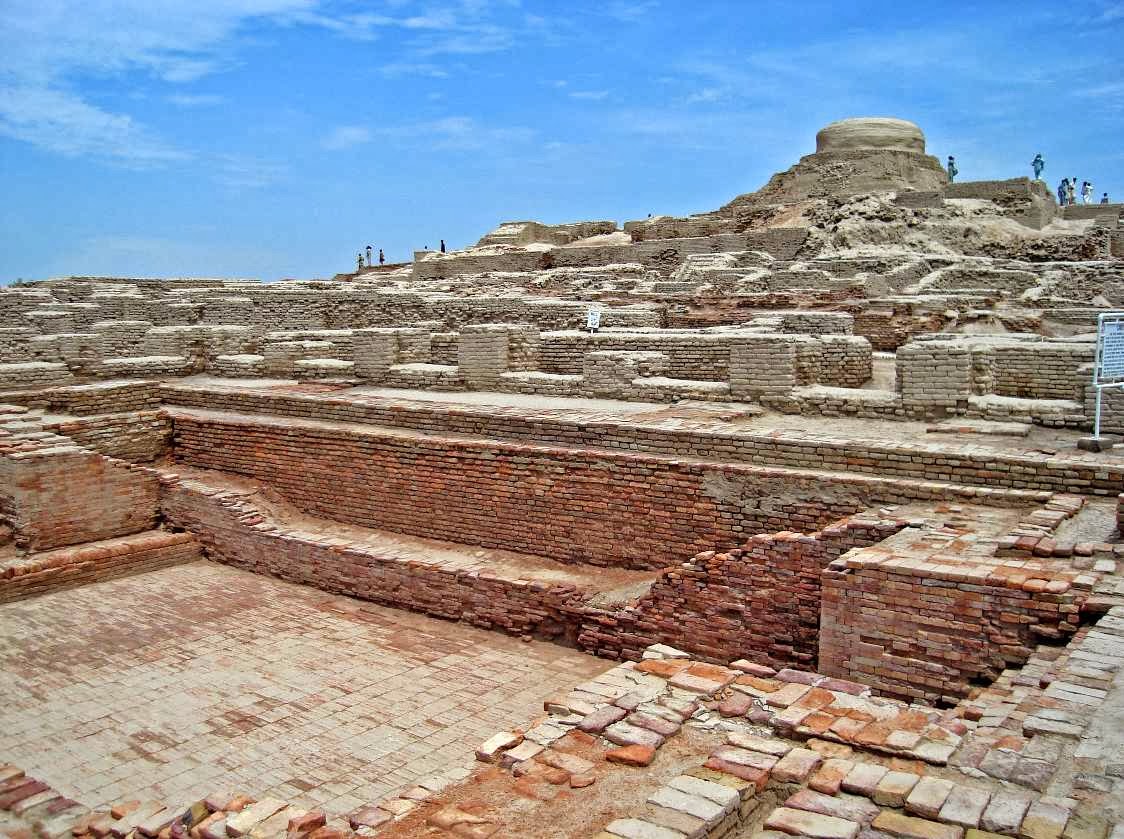
The BBC reported this week that conservationists in Pakistan have appealed to UNESCO to relocate a cultural festival scheduled to be held at the World Heritage Site Mohenjo Daro in the Sindh province. It is the world's oldest city and one of the largest settlements of the ancient Indus Valley Civilizations. The festival is the brainchild of the young leader of the Pakistan People's Party, Bilawal Bhutto Zardari.

"The ruins, discovered in 1922 by British archaeologist Sir John Marshall, are 425km (265 miles) north of the port city of Karachi. They are one of Pakistan's six Unesco World Heritage sites deemed places of special cultural significance. But many of the country's historical sites are crumbling through neglect, endangered by vandalism and urban encroachment, as well as a booming trade in illegally excavated treasures."
 
So who is in charge? Perhaps the more important question is, who should be in charge?
 
Conservation and Management of Archaeological Sites published 'Management Plans for Archaeological Sites: A World Heritage Template' in a 2010 issue of the journal. The article aims to make the general recommendations of a failed attempt to produce a Management Manual for World Heritage Archaeological Sites and Monuments, which brought together a body of experts in 2002 at Ma'agan in Israel, more widely known among those concerned with the management of archaeological sites.

The paper summarizes the outcomes of the meeting, including ideas on the structure of a management plan, the planning process, team building and public participation, site significance, conservation, monitoring, maintenance, presentation and interpretation, tourism and action plans.

"The properties on the World Heritage List are by definition very diverse in size and nature. The cultural sites and monuments range over time from fossil hominid sites (the Peking Man Site at Zhoukoudian and the Java Man site at Sangiran) to the architecture of the twentieth century (the Bauhaus and its sites in Weimar and Dessau and the works of Gaudí in Barcelona). They are located in countries with widely differing histories, traditions, and present-day legislative and administrative structures. As a result, the information given in these Operational Guidelines is of necessity generalized."

So when a nation's political agenda is in direct conflict with its responsibility to preserve World Heritage Sites for future generations, who decides the winner? Unfortunately that question appears to remain unanswered.

Read the full article for free >

Read the BBC article "Pakistan's Mohenjo Daro ruins 'threatened by festival" >